 Ελληνικά
 English
 Ἑλληνική ἀρχαία
 Κυπριακά
Echinodermata

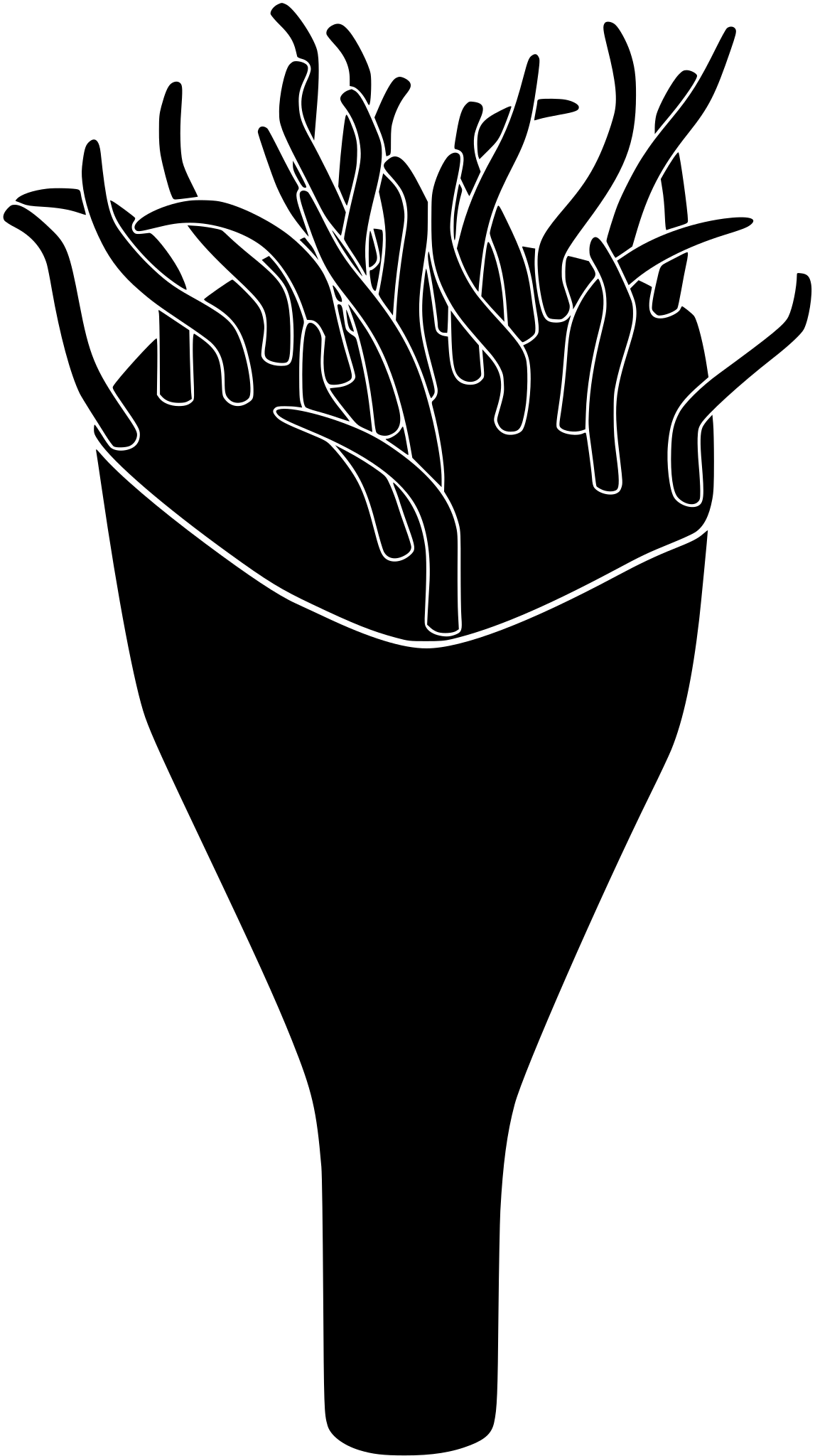
Echinoderms are a wholly marine clade that includes sea stars, brittle stars, sea urchins, sea cucumbers, and crinoids. Despite their varied forms, all share key traits: adult pentaradial symmetry, a water vascular system with tube feet, and an internal skeleton of calcareous plates or ossicles.
They possess mutable connective tissue, allowing them to rapidly stiffen or relax their body structure—useful for defense, movement, or even shedding limbs. Their locomotion, feeding, and respiration rely on hydraulic pressure rather than muscular systems. Though lacking a head, their sensory and nervous systems are distributed throughout the body.
Echinoderm larvae are bilaterally symmetrical, transforming into radial adults—a clue to their evolutionary background. The group appears in the Cambrian and has survived multiple extinction events, with notable shifts in dominance: crinoids thrived in the Paleozoic, while echinoids diversified in the Mesozoic and Cenozoic. Today, echinoderms occupy nearly all marine environments and fulfill roles from grazers to predators.

